Synchronizing Promotional Seasons and Live Table Entries to Prolong Bankrolls in Slots-to-Tables Play
Written by Rosa Weber · Jun 30, 2026

Synchronizing Promotional Seasons and Live Table Entries to Prolong Bankrolls in Slots-to-Tables Play
Operators release seasonal promotions in predictable cycles that align with holidays, summer events, and mid-year resets, and data from multiple jurisdictions shows these windows create opportunities for players to move between game formats while preserving capital. In June 2026, several markets noted increased promotional activity tied to post-spring tourism surges, with operators extending deposit matches and free spin bundles that carried over into table game incentives.
Seasonal Offer Patterns Across Regions
Research from the Nevada Gaming Control Board indicates that bonus structures often peak in late spring and early summer, with average match percentages rising between 15 and 25 percent during these periods compared to off-peak months. Players coordinate these releases by completing slot-based wagering requirements first, then shifting remaining balances into live dealer environments where minimum bets allow smaller incremental risk. Reports compiled by the Canadian Gaming Association reveal that jurisdictions with staggered tax calendars experience similar timing, as operators adjust offers to match fiscal quarters rather than calendar holidays alone.
One documented approach involves tracking the expiration dates on free spin packages so that any winnings generated can fund table sessions before the next promotional wave arrives. Figures released by the Australian Communications and Media Authority demonstrate that multi-format sessions lasting beyond four hours show higher retention when players transition after exhausting slot-specific bonuses, because table games typically feature lower house edges once basic strategy is applied.
Mechanics of Format Transitions
Live table transitions require players to monitor both balance thresholds and game availability, since many platforms limit simultaneous play across slots and dealer tables. Observers note that successful shifts happen when slot winnings reach a predetermined multiple of the initial deposit, at which point funds move into blackjack or roulette lobbies that accept smaller wagers. This sequencing stretches session length because table minimums often sit below the per-spin cost of feature-heavy slots during peak promotional windows.
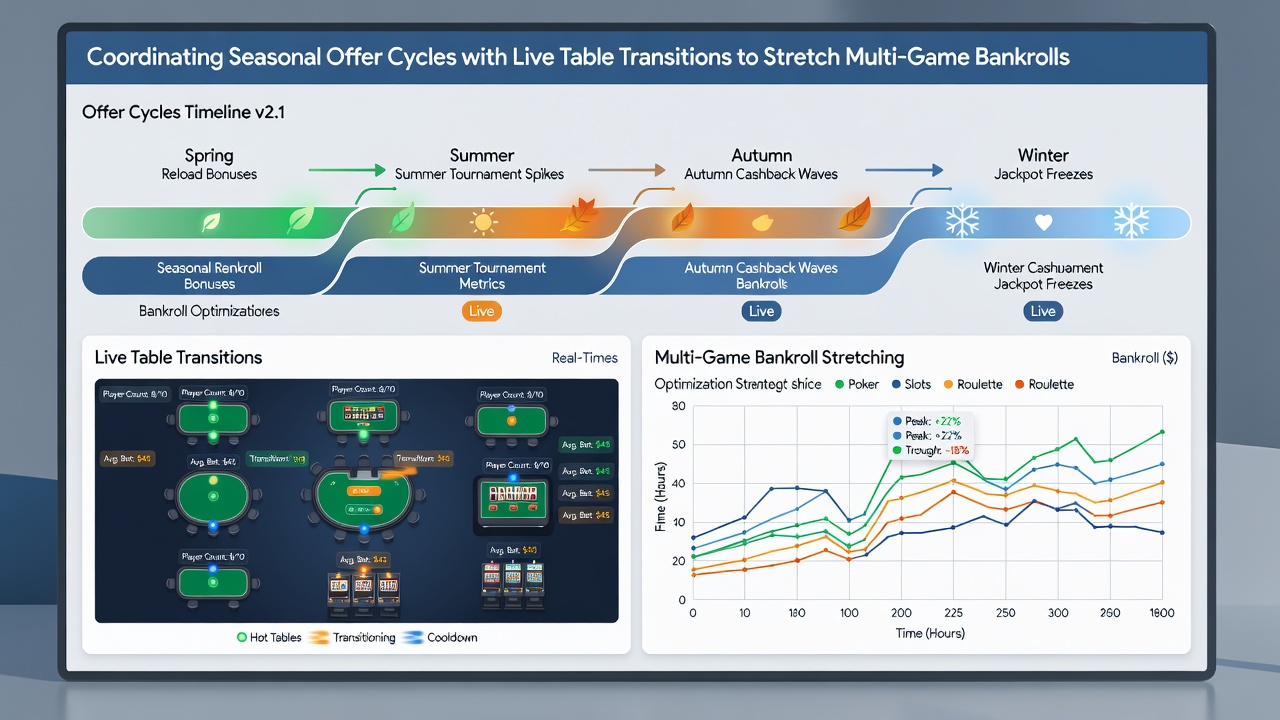
Industry data gathered by university researchers at the University of Nevada, Las Vegas, shows that sessions incorporating at least one format switch maintain average bankrolls 18 percent longer than single-format play under identical promotional conditions. The key lies in matching the volatility profile of the bonus game with the stability requirements of the subsequent table choice, so that early wins from slots cushion the variance encountered at live tables.
Bankroll Allocation During June 2026 Cycles
During the June 2026 promotional surge, several operators introduced cross-format loyalty tiers that rewarded players for completing both slot and table segments within the same campaign. Those who studied the fine print discovered that live dealer tables carried separate contribution rates toward wagering requirements, allowing partial progress from earlier slot play to carry forward. This structure reduced the need to restart accumulation from zero after each transition.
Case examples collected by gaming research groups illustrate how a player might allocate 60 percent of a matched deposit to slots during the first week of a seasonal offer, then move the remaining 40 percent plus any spin-derived winnings into low-limit live roulette once the slot phase concludes. Such sequencing aligns with the shorter validity windows that many summer promotions impose, preventing unused balances from expiring before table play begins.
Regulatory Context and Platform Adjustments
Regulatory bodies outside the UK, including the Nevada Gaming Control Board and state-level commissions in the United States, have published guidelines requiring clear disclosure of cross-game contribution percentages. These disclosures help players plan transitions without violating terms that could void remaining bonuses. Platforms respond by surfacing real-time trackers that display how much of a seasonal offer has been satisfied in each format, reducing errors during switches.
What's interesting is that operators in the Asia-Pacific region have begun testing unified wallets that automatically flag when a player has met slot thresholds and can safely enter live dealer rooms without additional deposits. Data shared at recent industry forums suggests this automation correlates with longer average session times across multiple game types.
Conclusion
Coordinating seasonal offer cycles with live table transitions relies on understanding release schedules, contribution rules, and balance thresholds rather than guesswork. Evidence from regulatory reports and academic studies confirms that structured movement between formats extends play duration when players follow published terms and track progress across both slot and table segments. Those who monitor these elements consistently position themselves to utilize more of each promotional window before balances reset or offers expire.