Synchronizing Incentive Notifications Across Gaming Platforms: Timing Strategies for Seamless Player Transitions
Written by Rosa Weber · May 23, 2026
Synchronizing Incentive Notifications Across Gaming Platforms: Timing Strategies for Seamless Player Transitions
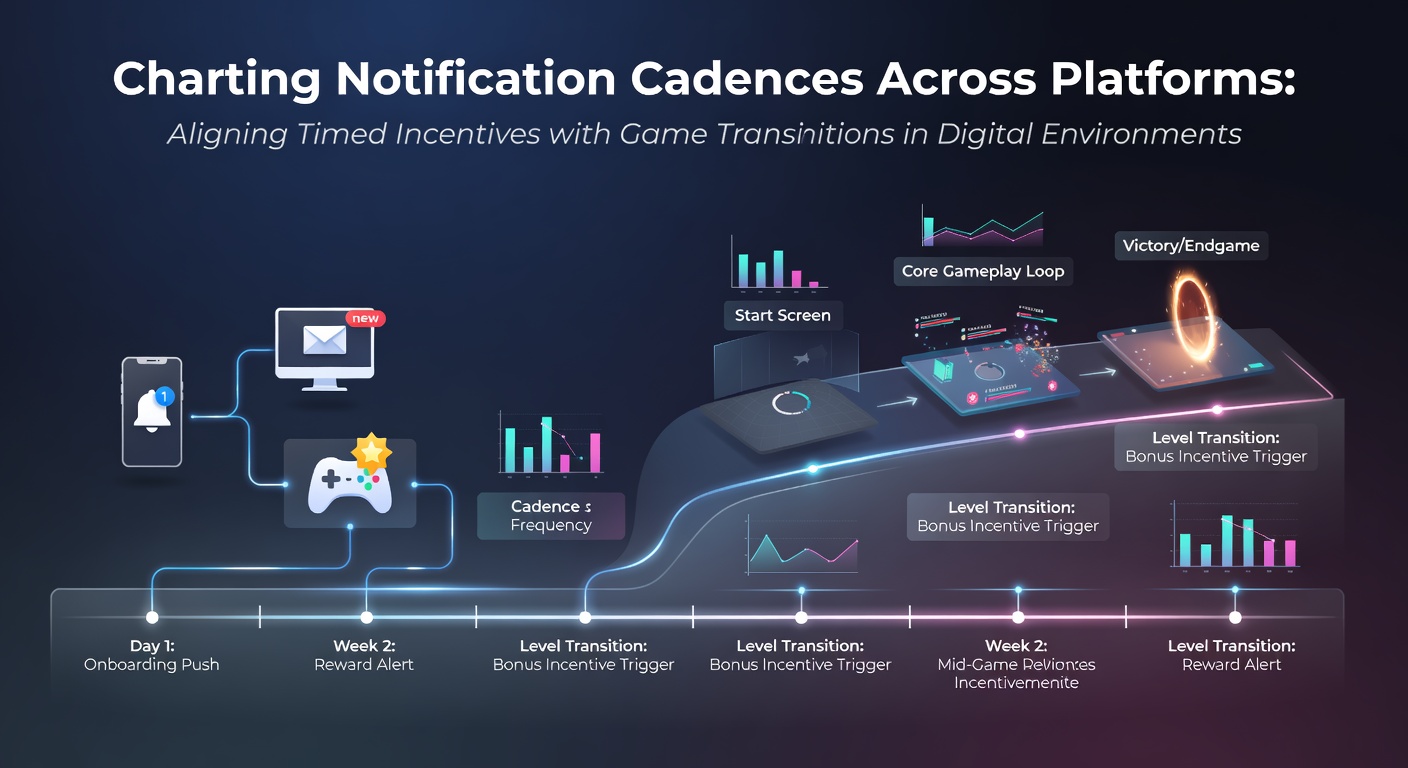
Digital environments rely on carefully calibrated notification systems to maintain user engagement through transitions between game phases, and researchers have documented how these cadences vary by platform while delivering incentives at optimal moments. Data from multiple studies shows that platforms adjust alert frequencies based on session length, user behavior patterns, and hardware capabilities, which creates distinct rhythms for mobile, console, and browser-based experiences.
Platform-Specific Notification Patterns
Mobile operating systems enforce strict limits on background processes, which forces developers to space out notifications in shorter intervals compared to desktop environments where longer idle periods allow for extended cadences. Observers note that iOS devices typically trigger push alerts at 15 to 30 minute gaps during active sessions, whereas Android implementations often extend this to 45 minutes when battery optimization features activate. Console ecosystems introduce further variations because they integrate with controller-based input and larger screens, leading to notifications that align with loading screens or menu transitions rather than continuous background delivery.
Cross-platform titles must therefore maintain separate cadence schedules that respect each environment's constraints, and evidence indicates that unified backend systems now handle these differences through conditional logic that detects the active device type before dispatching any alert. Those who've analyzed telemetry logs across thousands of sessions find that mismatched cadences result in lower response rates, prompting many studios to adopt modular timing engines.
Aligning Incentives with Game Transitions
Game transitions such as level completions, inventory updates, or daily reset cycles provide natural anchor points for timed incentives, and developers map notification triggers directly to these events to maximize relevance. Research indicates that rewards delivered within two minutes of a transition achieve higher claim rates than those sent during ongoing gameplay loops, because players are already in a receptive state after completing a segment. Platforms that synchronize alerts with these moments reduce user friction by presenting offers immediately after key milestones rather than interrupting mid-action sequences.
Studies from academic institutions reveal that certain genres benefit from clustered notifications around evening transition windows, while others perform better with dispersed daytime deliveries tied to short breaks. One analysis of progression data across multiple titles demonstrated that aligning bonus prompts with session-end events increased retention metrics by measurable percentages, prompting wider adoption of event-driven scheduling frameworks.
Data on Cadence Effectiveness
Figures from industry reports compiled in early 2026 show that average notification response rates hover around 22 percent when timing matches transition points, compared with 11 percent for randomly scheduled alerts. These statistics emerge from aggregated datasets covering North American and European markets, highlighting consistent patterns regardless of regional differences in user habits. Developers track open rates through embedded analytics that correlate notification timestamps with subsequent in-app actions, allowing iterative refinement of cadence parameters.
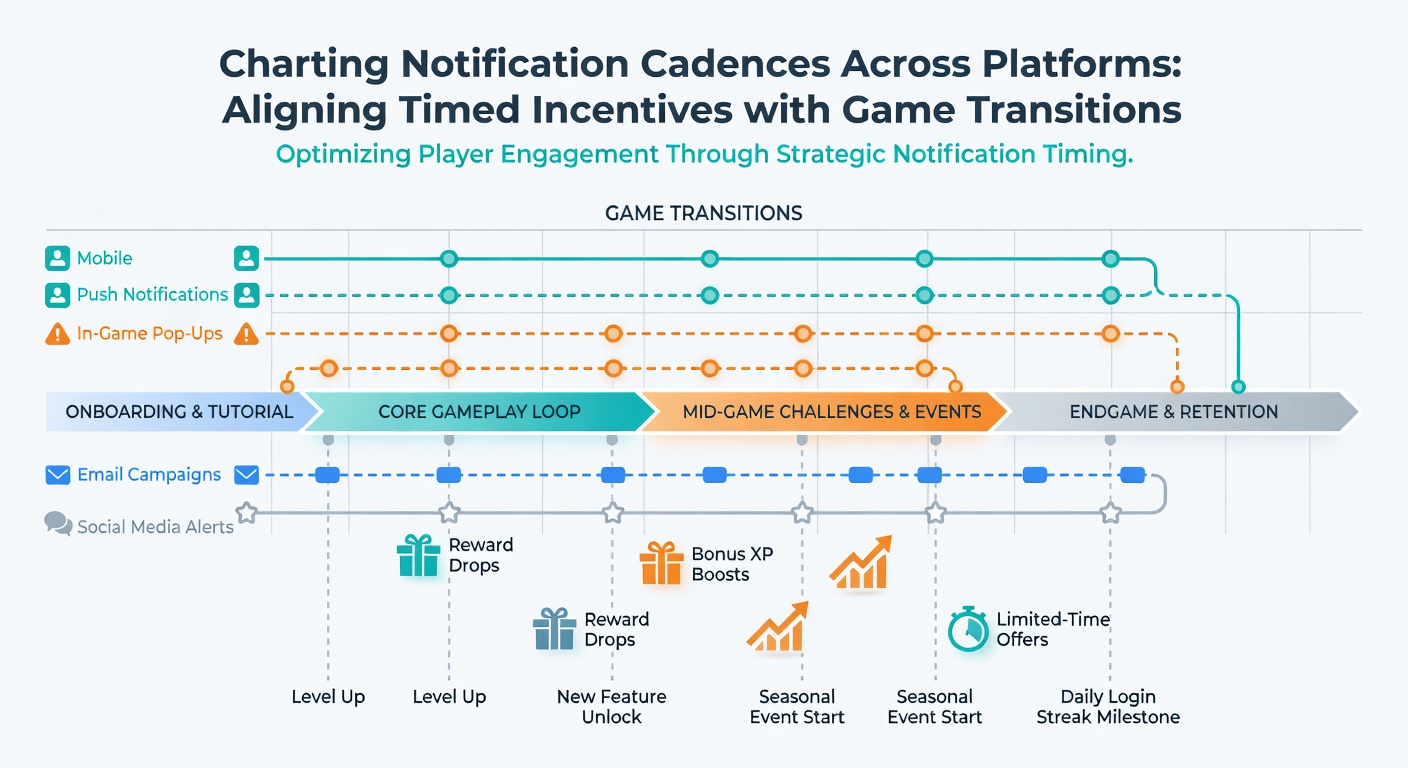
Additional findings from university-led examinations point to seasonal adjustments that account for shifts in average session duration during holiday periods, and these modifications maintain alignment between incentives and transition frequency. Observers note that platforms incorporating machine learning models to predict transition timing achieve further gains in engagement without increasing overall notification volume.
Implementation Approaches Across Ecosystems
Teams building multi-platform titles often deploy centralized dashboards that visualize cadence performance per device category, which enables rapid adjustments when new hardware releases alter baseline behaviors. External sources such as reports from the Entertainment Software Association document how studios integrate transition detection APIs that feed directly into notification services, ensuring rewards arrive precisely when players reach menu screens or complete objectives. This approach avoids overlap with unrelated alerts while preserving the intended incentive structure.
Regulatory frameworks in regions outside the UK, including guidelines from the Australian Communications and Media Authority, emphasize transparency around notification frequency to prevent user fatigue, and developers respond by publishing cadence policies within app stores. Evidence suggests that clear communication of these schedules correlates with higher long-term retention across diverse digital environments.
Future Directions in Cadence Management
Emerging tools allow real-time adaptation of notification intervals based on live user telemetry, and this capability becomes particularly relevant during large-scale events that compress multiple transitions into shorter windows. As of May 2026 several major platforms have begun testing dynamic cadence modules that shorten intervals during peak activity hours while extending them during low-engagement periods, maintaining alignment with natural game flow without manual intervention. Industry organizations continue to publish benchmarks that help smaller teams adopt similar practices.
Conclusion
Effective charting of notification cadences requires ongoing measurement against transition events across every supported platform, and the data consistently supports event-driven delivery over fixed schedules. Those managing digital environments benefit from modular systems that respect hardware limitations while preserving incentive timing, which leads to measurable improvements in user response and session continuity. Continued refinement through analytics ensures these strategies remain responsive to evolving platform behaviors and player patterns.