Skill Transfer in Gambling Analysis: Poker Strategies for Roulette Sequence Bias Detection
Written by Ben Schmitz · Aug 15, 2026
Skill Transfer in Gambling Analysis: Poker Strategies for Roulette Sequence Bias Detection
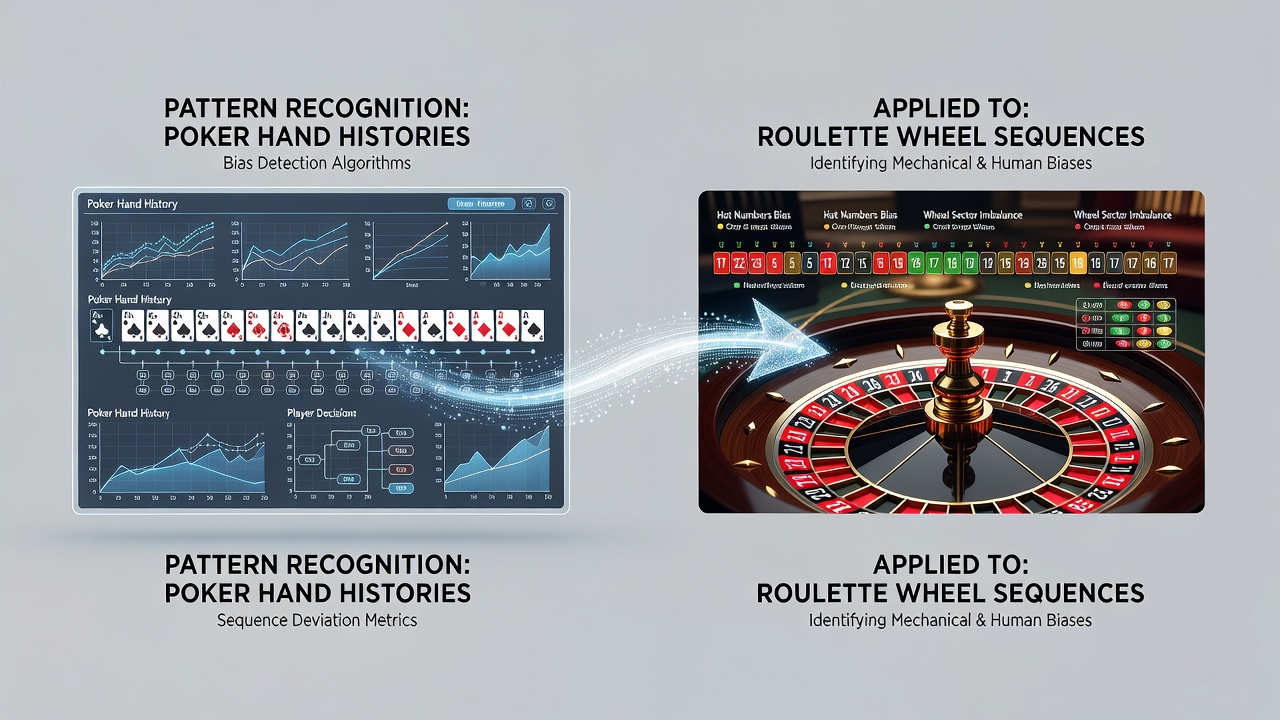
Pattern recognition forms a core element in both poker and roulette analysis, where players examine sequences to spot deviations from expected outcomes, and researchers have documented how skills developed in one domain carry over to the other through structured data review and probability tracking. Poker hand histories provide detailed records of card distributions, opponent tendencies, and frequency counts, allowing analysts to build models that highlight recurring patterns over thousands of hands, while roulette sequences offer similar numerical data sets from wheel spins that can reveal mechanical inconsistencies when examined with comparable methods.
Core Elements of Pattern Recognition in Poker
Players and analysts review hand histories by logging every action, pot size, and card shown, then apply statistical filters to isolate variables such as fold frequencies and raise rates across different positions. Software tools process these records to generate heat maps and deviation charts, revealing where opponents stray from baseline strategies, and this methodical approach trains the eye to detect anomalies in large data sets without relying on intuition alone. Studies in cognitive psychology indicate that repeated exposure to such datasets strengthens the ability to identify clusters and outliers, skills that transfer directly when the same individuals examine sequences from physical wheels.
Roulette Wheel Sequences and Potential Biases
Roulette outcomes follow a uniform distribution in theory, yet physical wheels can develop biases from wear on pockets, axle misalignment, or ball track defects, causing certain numbers or sectors to appear more often than the expected 2.7 percent probability on a European wheel. Analysts record thousands of spins, then compare observed frequencies against theoretical models using chi-square tests and sector mapping, methods that mirror the frequency tracking used in poker hand review. Data from regulatory testing in jurisdictions such as Nevada and New Jersey has historically identified measurable biases in older equipment, prompting casinos to rotate wheels and recalibrate mechanisms on scheduled intervals.
Transferring Analytical Techniques Between Games
Observers note that the same software platforms used for poker database analysis can import roulette spin logs, enabling users to apply identical filtering and clustering functions to both data types. One documented case involved a research team that adapted poker tracking algorithms to roulette records collected over 10,000 spins, uncovering a persistent bias toward a nine-number sector on a specific wheel model. The process begins with data cleaning to remove duplicates and timing errors, followed by segmentation into blocks that highlight temporal patterns, exactly as poker analysts divide sessions by blinds or tournament stages. University of Nevada Las Vegas gaming research has examined how these cross-domain methods improve detection rates when applied consistently.

Practical Steps for Applying Poker-Derived Methods
Analysts start by collecting raw spin data in the same structured format used for hand histories, then run variance calculations to flag numbers that exceed two standard deviations from the mean. Clustering algorithms group adjacent pockets to detect sector biases, while regression models control for dealer release points and ball speed variations, techniques refined through years of poker database work. Training programs in probability and statistics offered by academic institutions reinforce these practices, showing measurable improvement in anomaly detection after participants complete modules originally designed for card game analysis.
Limitations and Measurement Standards
Modern casinos employ continuous monitoring systems and regular maintenance that reduce the likelihood of exploitable biases, according to reports from gaming authorities in multiple regions. Sample sizes must reach several thousand spins before statistical significance emerges, and external factors such as ball changes or table movement can reset any developing pattern. Australian Gambling Research Centre publications emphasize that successful identification requires controlled conditions and verified equipment logs rather than casual observation.
Conclusion
The transfer of pattern recognition skills from poker hand histories to roulette sequence analysis rests on shared statistical foundations and disciplined data handling, allowing practitioners to apply proven techniques across both games when proper records and testing protocols are in place. Ongoing equipment standards and regulatory oversight continue to shape how these methods perform in operational settings.