Patterns in Game Volatility: Bridging Slots and Tables to Maximize Bonus Longevity
Written by Tina Lorenz · Jul 30, 2026
Patterns in Game Volatility: Bridging Slots and Tables to Maximize Bonus Longevity
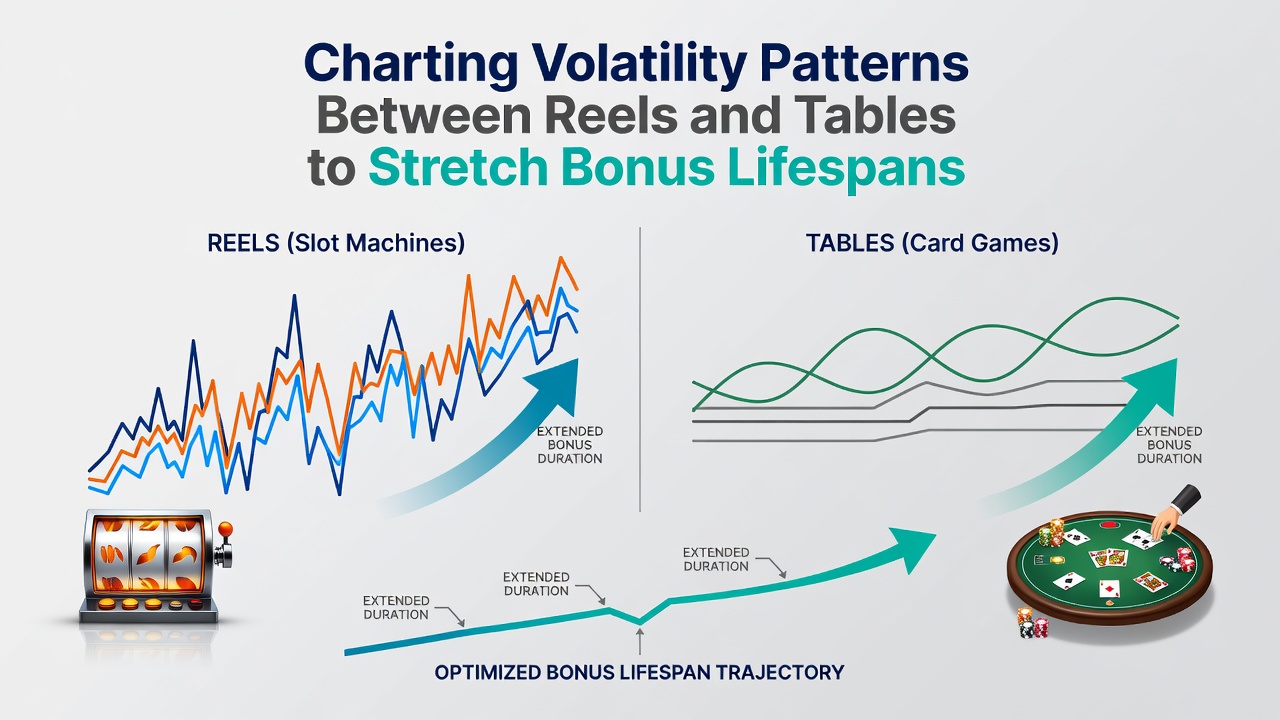
Volatility patterns shift noticeably when players move between slot reels and table games, and data from multiple jurisdictions shows how these transitions influence how long promotional credits remain active. Observers note that high-volatility reels often deliver infrequent but larger outcomes while table options like blackjack and roulette maintain steadier return curves, allowing participants to alternate between the two formats to manage play duration.
Defining Volatility Across Game Categories
Slot reels register volatility through their payout frequency and size distribution, with some titles clustering wins in short bursts and others spacing them across extended sequences. Table games display different profiles because outcomes derive from fixed probabilities and house-edge structures that produce more consistent results per round. Researchers at academic institutions have documented these distinctions in reports that track session-level data across thousands of plays, revealing clear differences in how bankrolls fluctuate under each format.
Those who examine aggregated records find that combining reel volatility spikes with table-game stability creates measurable extensions in the number of rounds a bonus can support. July 2026 figures from international gaming oversight bodies indicate rising interest in such cross-format approaches, particularly where operators adjust promotional terms to reflect player migration patterns between product types.
Mapping Transitions Between Reels and Tables
Charting tools track volatility by recording outcome variance over successive rounds, then overlay data from reel sessions onto table-game sequences to identify optimal switch points. One documented approach involves starting with medium-volatility reels to build early balance momentum, then shifting to lower-volatility tables once a threshold is reached, thereby reducing rapid depletion rates. Industry analyses from sources outside the UK confirm that this sequencing can lengthen the active lifespan of deposit-match credits and free-spin packages by 15 to 25 percent on average when executed consistently.
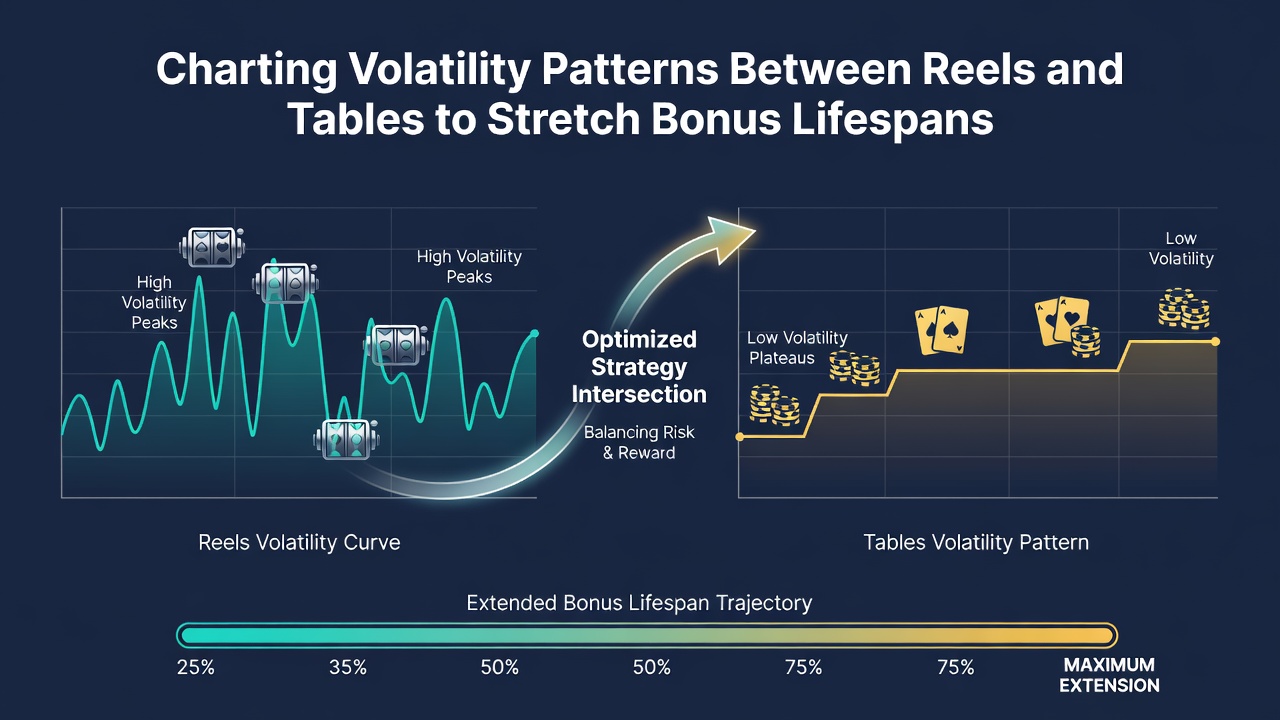
Additional studies conducted by Canadian research centers demonstrate similar outcomes when participants monitor real-time variance metrics and adjust game selection accordingly. The data shows that players who ignore these transitions tend to exhaust promotional funds faster because they remain locked into a single volatility band without recalibrating.
Applying Charts to Bonus Management
Practical charting begins with recording individual game metrics such as hit frequency, average payout size, and session duration, then plotting these values against remaining bonus requirements. Participants who maintain simple spreadsheets or use operator-provided tracking features can spot when reel volatility is rising and pivot to table formats that absorb smaller losses without exhausting credits. According to Nevada Gaming Control Board statistical summaries, cross-format sessions in regulated markets exhibit longer average playtimes when volatility balancing occurs.
Further evidence from Australian regulatory disclosures highlights that structured alternation between reels and tables correlates with reduced early termination of bonus offers. Observers note that the key lies in recognizing variance inflection points rather than relying on fixed game preferences. Those who review historical play logs frequently identify recurring windows where table stability offsets reel swings, preserving promotional balances through additional rounds.
Regional Data Trends in 2026
July 2026 records compiled by European gaming associations show increased adoption of volatility-aware bonus strategies across multiple licensed platforms. Figures reveal that operators offering mixed reel-and-table promotions recorded higher retention rates when players applied transition charts. These patterns hold across different regulatory environments, suggesting the underlying mechanics remain consistent regardless of jurisdiction.
Academic papers published by European universities have examined large datasets from live dealer and automated table environments, confirming that variance smoothing through format switching extends the number of qualifying rounds before bonus expiration. The evidence indicates measurable differences in outcome distribution when participants actively chart and respond to volatility shifts rather than selecting games at random.
Conclusion
Volatility charting between reels and tables provides a documented method for extending bonus lifespans through deliberate format transitions. Data from multiple oversight sources and research institutions supports the observation that alternating between high-variance slots and steadier table games can preserve promotional credits for additional play cycles. Players who track these patterns and apply them consistently operate within the statistical frameworks already established across regulated markets.