Linking Slot Volatility Metrics to Table Game Transitions for Sustained Play Durations
Written by Nils Hartmann · Jul 21, 2026

Linking Slot Volatility Metrics to Table Game Transitions for Sustained Play Durations
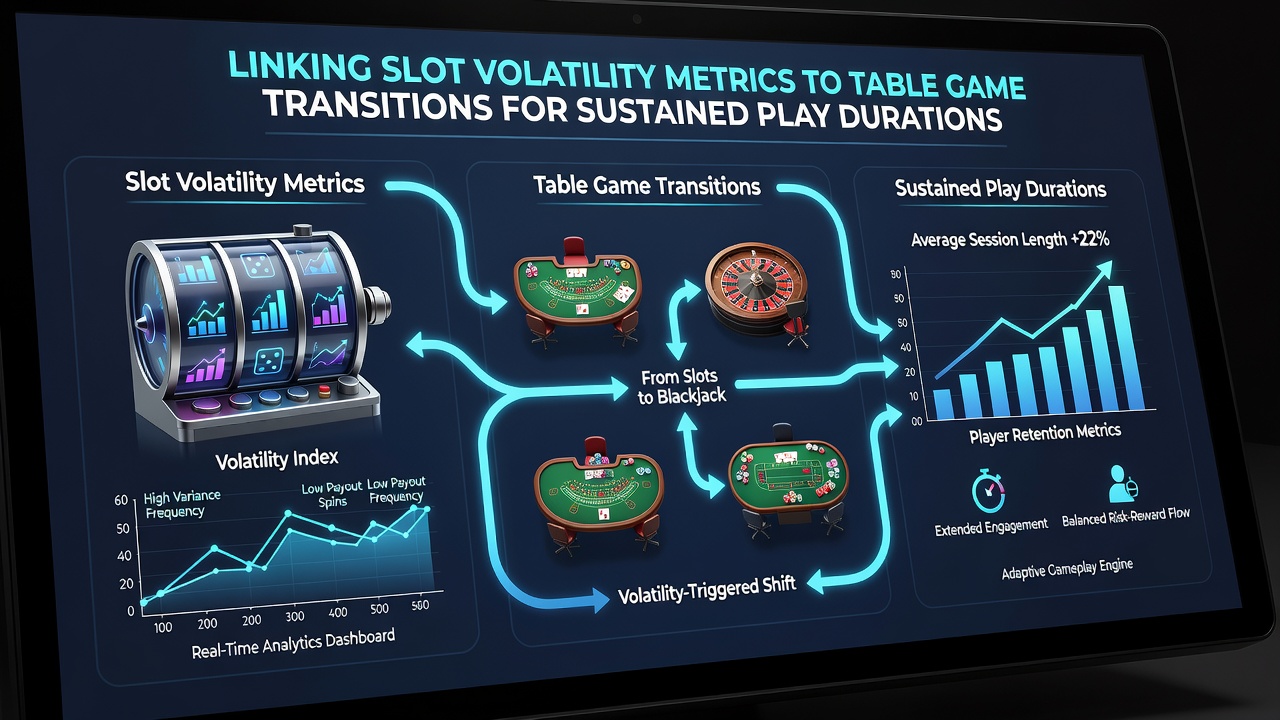
Slot volatility metrics categorize games into low, medium, and high risk levels based on payout frequency and size, which directly influences how long sessions last before players shift to table games. Data from multiple casino operators shows that low-volatility slots produce frequent small wins that extend initial play periods, whereas high-volatility titles create longer dry spells that often prompt transitions to blackjack or roulette for steadier engagement.
Researchers track these patterns through session analytics, noting that volatility ratings correlate with specific transition points where bankrolls reach thresholds that encourage movement to lower-variance options. In practice, players who start on medium-volatility reels often maintain play for 45 to 60 minutes before seeking table games that offer more predictable outcomes per hand or spin cycle.
Understanding Volatility Categories and Their Effects
Low-volatility slots deliver returns in smaller increments at regular intervals, which keeps bankrolls stable and supports extended time on the machine without rapid depletion. Medium-volatility games balance occasional larger payouts with moderate frequency, creating a middle ground that holds attention while still introducing enough fluctuation to trigger interest in table alternatives. High-volatility slots, by contrast, feature infrequent but substantial wins, and figures reveal that these titles lead to quicker bankroll swings that accelerate shifts toward table play for sustained durations.
Studies compiled by the University of Nevada, Las Vegas gaming research center indicate that volatility metrics can predict average session lengths with measurable accuracy across different player segments. Those metrics factor in hit frequency, payout distribution, and bonus round triggers, all of which feed into models that forecast when transitions to table games become statistically likely.
Transition Patterns Observed in Operational Data
Casino floor observations document consistent movement from slots to tables once volatility-driven win or loss streaks reach certain magnitudes. Players exiting high-volatility machines frequently select blackjack tables because the game's lower house edge per hand supports longer play windows compared with the reel variance they just left. Roulette attracts similar transitions when participants seek even-money betting structures that reduce the impact of sudden bankroll changes.
Reports from the Nevada Gaming Control Board highlight that table game areas experience measurable increases in activity during peak hours that follow slot bankroll resets. These shifts occur because table games allow incremental betting adjustments that align with remaining funds after volatility exposure, thereby extending overall visit duration.
Metric Integration for Session Planning
Operators apply volatility data to layout decisions that encourage seamless movement between game types, placing table pits near slot banks that feature higher volatility titles. This arrangement capitalizes on natural transition timing, as players finishing volatile sessions encounter table options before exiting the area. July 2026 industry briefings from multiple North American jurisdictions noted rising adoption of real-time volatility dashboards that help staff anticipate these flows and adjust table minimums accordingly.
Academic analyses published through the Australian Gambling Research Centre demonstrate that linking volatility scores to table game selection improves retention metrics when casinos monitor cumulative play time across both categories. The models incorporate RTP percentages alongside volatility ratings to estimate how long a given bankroll might last when players alternate between reels and felt.
Regional Comparisons and Reporting Standards
European gaming associations collect parallel data sets that compare slot-to-table transition rates across different regulatory environments, revealing that volatility awareness influences session length more strongly in markets with transparent game information. Canadian provincial regulators have published summaries showing similar patterns where medium-volatility slots serve as entry points that later feed into poker or baccarat tables for extended engagement.
These cross-regional findings underscore that volatility metrics function as reliable indicators regardless of specific game mix, provided operators maintain consistent measurement protocols. Data integration between slot management systems and table pit reports now occurs at many large properties to quantify the exact duration gains achieved through planned transitions.
Conclusion
Volatility metrics supply a measurable framework for anticipating when slot players will move to table games, and the resulting session extensions appear consistently in operational records from multiple jurisdictions. Continued refinement of these linkages supports more accurate forecasting of play durations while maintaining clear separation between game categories.