From Spinning Reels to Raising Stakes: Mechanics Behind Using Slot Payouts for Poker Bankrolls
Written by Rosa Weber · Jun 23, 2026

From Spinning Reels to Raising Stakes: Mechanics Behind Using Slot Payouts for Poker Bankrolls
Slot machines release winnings through fixed payout percentages and random number generators that determine hit frequencies, while poker bankrolls require separate allocation rules based on variance and session length. Observers note that players often move credits from one format to the other by first cashing out slot balances into digital wallets or venue accounts, then applying those amounts as starting stacks at poker tables. Data from multiple jurisdictions shows average slot return-to-player figures range between 92 and 96 percent according to reports issued by the Nevada Gaming Control Board, creating predictable yet modest inflows that participants must scale against poker buy-in requirements.
Mechanics begin with session logging where operators record each spin outcome and aggregate totals before any transfer occurs. Those who track results use spreadsheets or casino apps to separate slot-derived funds from other deposits, ensuring clear boundaries that satisfy internal bankroll formulas such as allocating no more than 5 percent of total capital per poker sit-and-go or cash-game entry. Research indicates that separating these streams reduces the chance of cross-contamination between high-volatility slot play and skill-based poker decisions.
Tracking Payout Cycles and Withdrawal Thresholds
Slot payout cycles operate on programmed reel strips and bonus trigger rates that release larger sums at irregular intervals. When cumulative winnings reach operator-defined cash-out minimums, usually set between 20 and 50 credits, funds become eligible for transfer. Players convert these balances through electronic methods including e-wallets or direct account credits that appear within minutes at affiliated poker platforms. Studies compiled by the Canadian Gaming Association reveal that electronic transfers now account for over 70 percent of all movement between gaming verticals, shortening the time between slot sessions and poker entries.
Multiple clause structures appear in practice because operators apply different verification steps depending on payment size. Smaller amounts clear instantly while larger withdrawals trigger identity checks that add hours or days before poker tables receive the capital. Those who have monitored these flows report that timing the conversion after bonus rounds or progressive hits maximizes available bankroll without additional deposits.
Allocation Formulas Used by Players
Bankroll formulas treat slot payouts as variable income rather than guaranteed revenue. A common approach divides the incoming amount into three portions: 40 percent reserved for poker buy-ins at stakes matching current skill level, 30 percent held as reserve against downswings, and the remaining 30 percent returned to slot play for continued generation of funds. Evidence from university-led gambling behavior papers shows participants who follow such divisions maintain longer overall playing periods across both formats.
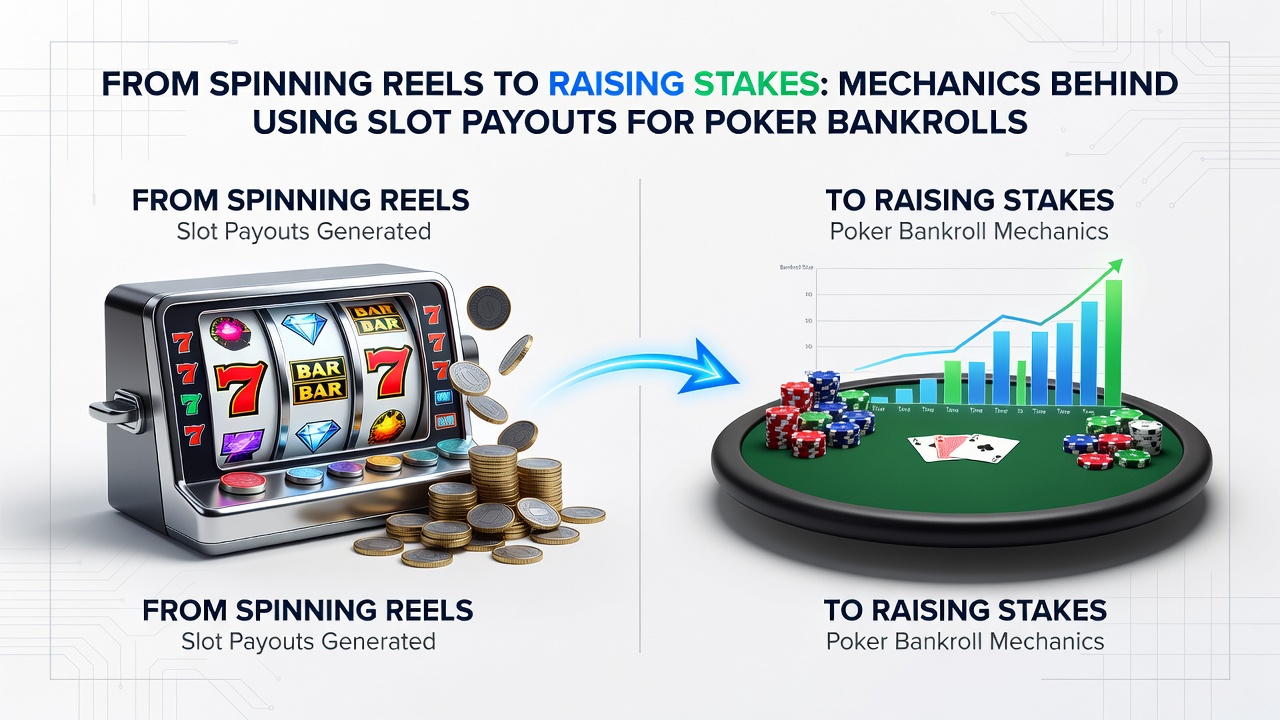
Live dealer environments add another layer because rake structures and table minimums differ from online poker rooms. Participants adjust allocation percentages upward when moving to higher-limit games to accommodate greater variance, whereas micro-stakes tables allow smaller reserved portions. Figures released by the American Gaming Association indicate steady growth in cross-format bankroll movement during 2025, with similar trends expected to continue into June 2026 as more integrated wallet systems launch across major operators.
Observed Patterns in Cross-Format Movement
Case examples collected by researchers demonstrate recurring sequences where players finish a slot session, note the net gain, then immediately open a poker client to select tables whose buy-ins fall within the newly available range. One documented pattern involves using slot jackpots exceeding 500 credits to enter mid-stakes tournaments rather than cash games, because tournament structures cap total risk at the initial buy-in. Another pattern shows gradual scaling where repeated small slot wins build a poker bankroll over several days instead of single large transfers.
What's interesting is how software tools now automate parts of this process. Certain casino groups provide unified ledgers that tag each credit source, allowing players to filter poker entries by slot-derived funds alone. Industry reports confirm these features reduce manual tracking errors and support compliance with responsible gambling limits that some venues impose on daily transfer volumes.
Regulatory and Platform Considerations
Platform rules vary by region yet share common requirements around source-of-funds verification. Transfers above certain thresholds may require proof the money originated from gaming activity rather than external deposits. Observers note that clear record-keeping of slot sessions satisfies most requests without additional documentation. Data from the Australian Communications and Media Authority highlights increasing use of automated audit trails that link slot payouts directly to subsequent poker activity, streamlining compliance for both operators and participants.
Payment processor fees also factor into net bankroll calculations. Electronic wallet services typically charge between 1 and 3 percent per transfer, reducing the final amount available for poker play. Those monitoring long-term results adjust allocation formulas slightly higher to offset these costs while still preserving the core 40-30-30 split.
Conclusion
Mechanics connecting slot payouts to poker bankrolls rest on documented payout percentages, electronic transfer systems, and structured allocation formulas that separate income streams. Research from gaming associations and regulatory bodies across North America and Australia demonstrates consistent patterns in how players move and divide these funds. Platform integrations continue to shorten processing times while maintaining verification standards that protect both operators and participants. The process remains governed by the same mathematical and procedural rules observed in earlier years, with incremental improvements in wallet technology expected through mid-2026.